
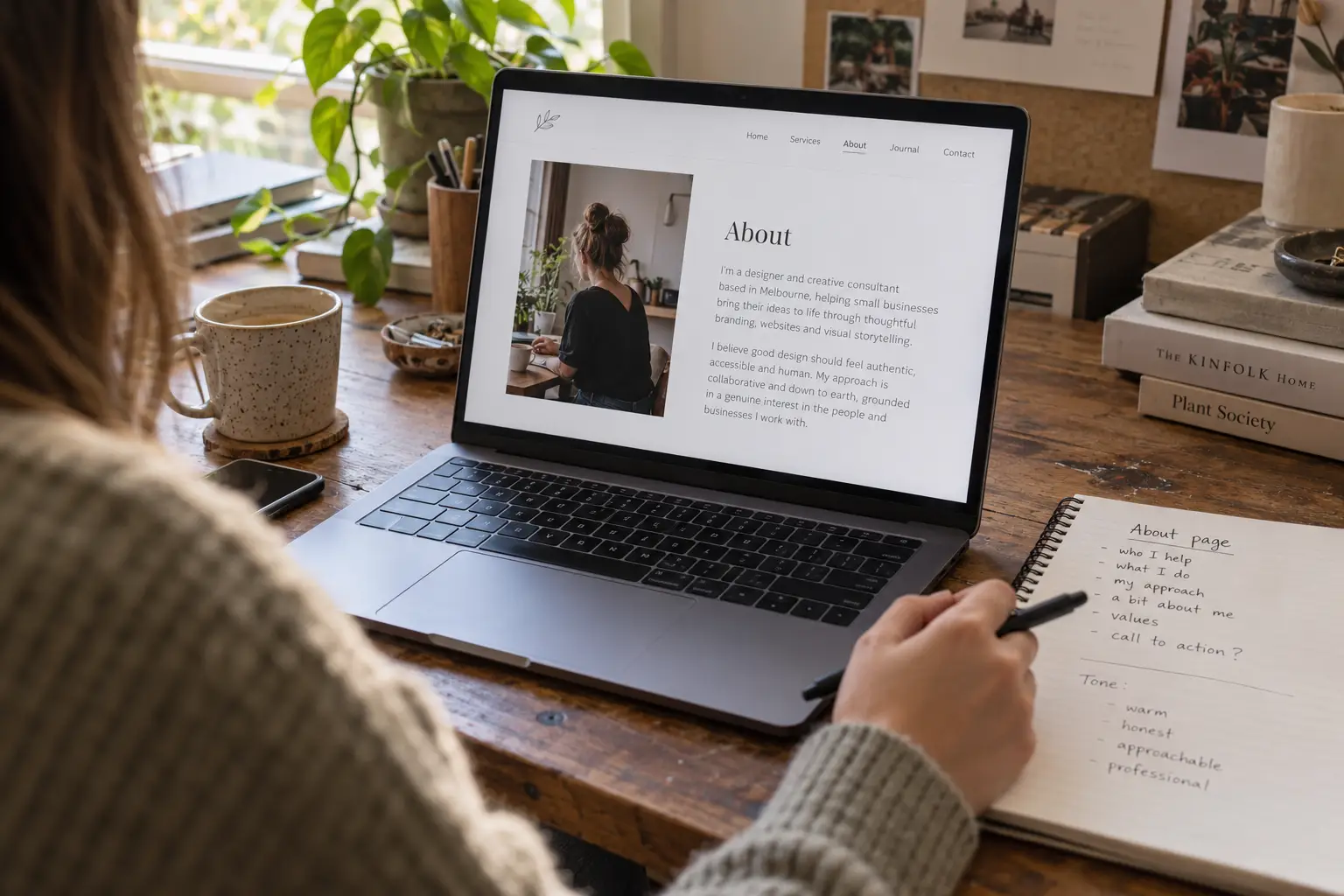
My About page impressions jumped 5,058% after I updated recently. That was a lovely result to see, especially with so much conversation around Google updates and search changes.
But the percentage is only part of the story. What I want to share is how I approached the content, because it gives other business owners something practical to look at on their own websites.
An About page is often written once and then left alone. It might tell people when the business started, list a few services and say something about quality and customer service.
There is an opportunity to make it much more useful. Someone visiting your About page is often trying to work out who you are, whether you understand what they need and whether they would feel comfortable working with you.
That is what I wanted my page to help them do.
I made my approach clearer
I have been running Absolute Web Design for 17 years, and a lot of research, testing, and monitoring goes into how I approach a website.
My About page needs to explain what that means for the person considering working with me.
Strategy first and conversion focused are central to how I work. Before deciding how a website should look, I look at the audience, services, positioning and business goals. That helps shape the content, page structure and next steps.
For someone reading the page, this explains why I ask questions about their customers and what they want their website to achieve.
On your own About page, consider whether you explain your approach clearly enough. What do you do before starting the work? What do you consider before making a recommendation? How does that help your customer?
These details give people something more useful than a general promise of great service.
I focused on what matters to the customer
As business owners, we know our businesses inside out. It is easy to write from that perspective and assume other people will understand why certain details matter.
Your potential customer may be looking for something quite different.
They might want to know whether you have worked with businesses like theirs, whether you can help with their existing website or what support is available after launch.
For my business, explaining new websites, website refreshes, conversion optimisation and website care helps people understand where they might fit.
Think about the conversations you have before someone becomes a customer. What do they ask? What are they unsure about? What helps them feel comfortable taking the next step?
Your About page can start answering those questions before you speak.
I gave more context to my experience
Saying you have been in business for a certain number of years is useful. Explaining how that experience shapes the service gives it more meaning.
For me, 17 years in business has involved working with different platforms, different businesses and different customer needs. It has also reinforced how much the wording and order of information matter.
A website needs to explain the service clearly, give people reasons to trust the business and make it easy to enquire.
Your experience will look different. You might have specialist training, practical knowledge from years on the tools or a process developed through working with a particular type of customer.
Give people enough detail to understand why that experience is relevant to them.
I looked at the flow of information
The order of information affects how easily someone understands a page.
If visitors have to move between several sections to work out who you help and what you do, the page may need a clearer structure.
The questions I come back to are simple. Does the page explain who is behind the business? Can someone understand how the business works? Is there enough relevant detail to help them decide whether to get in touch?
Read your About page from the perspective of someone who has never met you. Look for anything that feels repetitive, unclear or out of place.
Sometimes the information is already there. It just needs to be organised so the reader can follow it.
I connected the About page to the rest of the website
Your About page should help someone continue to the information they need.
If you mention a service, give them a way to read more about it. If you explain your approach, make sure the service pages reflect that approach too.
For example, if you say you provide practical advice and clear options, your service pages should explain those options. If ongoing support is part of your offer, people should be able to find out what that support includes.
This creates a more consistent experience as someone moves through the website.
On your own site, check whether your About page gives people a useful next step. They may be ready to contact you, or they may need to read about a service first.
What the increase actually tells me
The 5,058% increase means my About page appeared in Google search results much more often than it did in the previous month.
It does not mean enquiries increased by the same amount. It also does not prove that one content change caused the result.
A large percentage increase needs context, particularly when the starting number is small. I would look at the actual impressions, the searches the page appeared for, clicks and what visitors did after arriving.
Still, it was an encouraging result and a useful reason to keep reviewing the page.
When you make changes to your website, keep a note of what you updated and when. Then compare the data over time. That gives you a clearer basis for deciding what to improve next.
What you can review on your own About page
You do not need to copy someone else’s page. Start by checking whether yours helps your potential customer understand your business.
Look at whether it:
- Explains who you help and what you do.
- Introduces the people behind the business.
- Shows relevant experience with enough detail to make it meaningful.
- Explains how you approach the work.
- Answers questions people ask before contacting you.
- Leads naturally to relevant services or an enquiry.
Read it out loud too. Does it sound like you? Would a customer recognise the way you explain things in a conversation?
If the wording could sit on almost any competitor’s website, add more of your actual experience and approach.
Your About page deserves some attention
Your About page gives people a chance to understand the business behind the service. It can help them feel more comfortable, answer questions and support their decision to contact you.
That is why I treat it as part of the wider website strategy.
If yours has not been reviewed for a while, start there. You may already have plenty of useful information. The next step is making sure it is clear, relevant and easy to follow.